What to Look for in a Reliable Custom Busbar Manufacturer
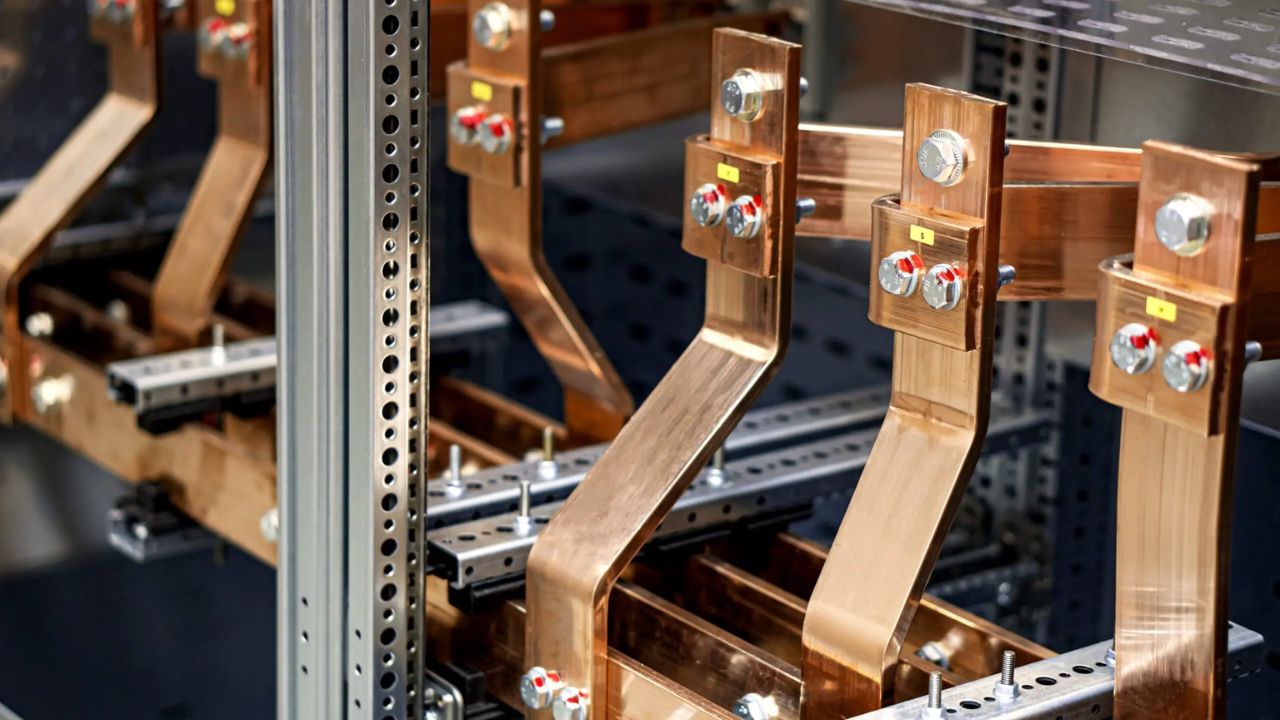
The choice of the correct custom busbar manufacturer is a strategic choice that directly influences the safety, efficiency, and life of the electrical system. Busbars are essential components in switchgear, control panels, renewable energy systems, electric vehicles, and industrial machines, where high currents need to be distributed dependably and safely. Since these elements affect how their thermal management works, conductivity, and the performance of the system in general, companies have to scrutinize the manufacturers. An effective partner is not only one that has a greater capacity to produce, but also one that gives engineering expertise, quality control, and durability in operations.
Engineering Expertise and Technical Support
A reliable custom busbar manufacturer is one that exhibits good engineering capacity at the very early stages of a project. Instead of just copying drawings, the manufacturer examines designs to get the best geometry, good flow of current, and good heat dissipation. Design for Manufacturability assistance can be used to determine whether there will be difficulties in the production process, even prior to the fabrication stage, thus saving on time and other expensive redesigns. The manufacturer possessing skilled engineering departments is able to suggest modifications that enhance structural stability, reduce material waste, and improve the overall performance of the systems. This is a collaborative method, which guarantees that the end product is both electrically and mechanically compliant.
Material Knowledge and Selection Capability
Another necessary consideration when considering a manufacturer is material expertise. Busbar production is mainly done using copper and aluminum, which have a unique advantage based on the application. Copper offers better electrical conductivity and is best suited for small, high-current applications, and aluminum offers the benefit of weight reduction and affordability in transportation and large-scale applications. A solid manufacturer would be aware of alloy grades, tempers, as well as performance, and would advise customers on the most appropriate choice of material. Complete traceability and compliance documentation are other indications of professionalism and compliance with international standards.
Advanced In-House Manufacturing Processes
Manufacturing capability is an important factor in consistency and lead time performance. The companies that manufacture products with highly developed CNC cutting, punching, and forming equipment have better dimensional accuracy and repeatability. Holding fabrication operations under a single roof would eliminate the dependence on outside suppliers and limit supply chain risks. There is also faster scheduling and easy management of the workflow in the integrated production environments. Such a degree of control over processes will guarantee that every custom busbar is manufactured to extremely accurate specifications and with very fast turnaround.
Surface Finishing and Protective Treatments
Long-term electrical reliability is dependent on surface finishing. Oxidation and corrosion may raise the contact resistance and lower the performance without the necessary protection. A good custom busbar manufacturer provides either option of tin, silver, or Nickel plating to improve conductivity and durability. Besides this, insulation coats and resistant finishes enhance safety and resistance to the environment. When the in-house solutions undertake these treatments, quality management is also maintained, and the end product is highly reliable in harsh operating conditions.
Rigorous Quality Assurance Standards
Good quality assurance processes can be used to differentiate between established manufacturers and those who are not so experienced. An inspection facility that is professionally conducted establishes organized inspection procedures to check dimensions, conductivity, hardness, and dielectric strength. An objective pre-shipment assessment is done by independent quality control departments. A comprehensive inspection report and material certification will show transparency and accountability. The manufacturer will achieve this by ensuring that all busbars will work with consistency in essential power distribution systems, and by ensuring that quality standards can be measured.
Flexibility and Scalability
The other factor to note is how the manufacturer is able to adjust to the different project requirements. A trusted custom busbar manufacturer is capable of handling a small batch of prototypes and a large volume production without losing quality or delivery times. The ability to flex in and out on design iterations and material decisions or last-minute production requests is an indication of operational maturity as well as a desire to see the customer succeed. Scalability means that when the needs or evolutions of a client increase, the manufacturer will be able to offer similar performance, and hence the client can involve them in the continuity of electricity projects to do so.
Conclusion
When making the decision to select a trusted custom busbar supplier, it is necessary to pay attention to the engineering capacity, the knowledge of materials, the ability to control the manufacturing process, the skill of the finish, and the standards of quality control. The companies investing in a qualified partner enjoy a high performance of the system, less loss of success, and an easy run of the project. By focusing on technical competence and operational transparency rather than short-term cost control, firms will be able to form long-term relationships that will help them achieve effective and reliable distribution solutions in the power distribution.